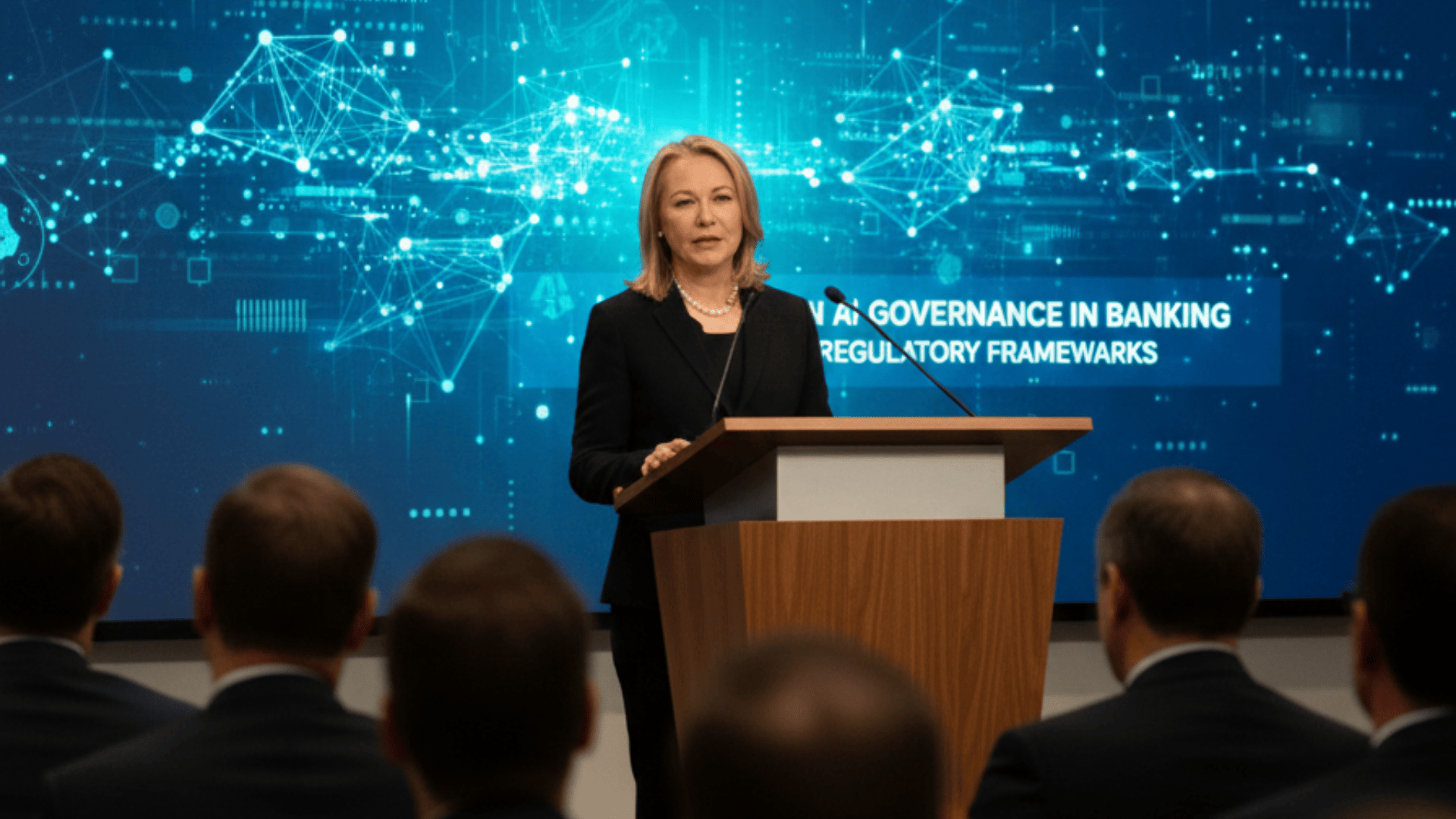
AI is picking up speed inside banks, but governance isn’t keeping pace. That’s the tension Lisa Pent is tackling at the IBANYS Regulatory Compliance Update on February 3rd. Banks are trying to push forward with smarter tools and automation, while examiners are asking sharper questions about ownership, oversight, and monitoring. If it feels like trying to race with the parking brake on, you’re not imagining it.
The pressure on community bank leadership is real. There’s a need to innovate, to stay competitive, to serve customers better but also to stay within guardrails that weren’t built with machine learning in mind. Regulators expect structure. Boards want clarity. And employees need someone to define the line between smart risk and risky business. This talk gives you that line, drawn in pen.
Lisa doesn’t just bring theory. She brings actual, in-the-weeds insights from how banks like yours are making AI work without tripping compliance wires. She’s showing what examiners are really focused on, how to build frameworks that don’t suffocate innovation, and how to keep moving with intention instead of spinning wheels or freezing in place.
Straight Talk on What This Session Covers
- Lisa Pent is speaking at the IBANYS Regulatory Compliance Update to share how community banks are managing AI and innovation under regulatory pressure.
- Banks feel torn between wanting to move fast and needing to meet examiner expectations on governance and oversight.
- A lot of banks think a policy or committee is enough, but regulators want clear roles, ongoing monitoring, and documented decision making.
- Lisa’s session offers practical models for AI oversight that fit the scale and complexity of community institutions.
- Attendees will leave with specific ways to structure AI projects, assign ownership, and stay ready for examiner questions.
“We Wrote a Policy” Isn’t a Governance Strategy
Plenty of banks feel like they’ve already checked the box. They’ve got an AI policy. Maybe they formed a task force or sent someone to a fintech summit. But Lisa Pent’s talk at the IBANYS Regulatory Compliance Update shines a light on why that isn’t enough anymore. AI oversight that stops at policy is like locking the front door while leaving the windows open. It won’t hold up when regulators come calling.
The truth is, oversight gets messy where responsibilities are shared or fuzzy. One team owns the vendor contract. Another manages risk. A third handles compliance. But nobody connects the dots. Lisa will break down how to set up clear, simple accountability without creating layers of red tape that stall progress.
Expect to hear what works, what’s causing real friction, and how to keep the machine running while making sure every moving part is logged, owned, and ready to explain.
One Examiner Question Can Change Everything
Imagine this. You’ve just rolled out a new AI-powered chatbot. It’s answering questions, saving your team time, and customers love it. Then, an examiner asks, “What’s your process for monitoring drift in model behavior?” Suddenly, you’re scrambling. Lisa Pent will address stories like this at the IBANYS Regulatory Compliance Update because this is where most banks get caught off guard.
She’s heard from leaders who assumed their vendor handled all the technical stuff, only to find out nobody was logging changes to the algorithm. In one case, a bank didn’t realize their vendor updated the logic until a customer flagged a weird answer. Another bank got flagged during an exam when they couldn’t show documentation for model approvals. Not malicious mistakes just the result of unclear handoffs.
Lisa’s bringing these real-world moments to the stage so bank leaders can prep now, not apologize later. No shame. Just smarter structure.
Strong Frameworks Make Everything Smoother
When governance is baked in early, AI projects don’t just go smoother they scale better. Lisa Pent is showing at the IBANYS Regulatory Compliance Update how banks are using simple frameworks to create clarity, speed, and confidence across teams. This isn’t about complex policies. It’s about making sure everyone knows their role and how it all fits together.
She’ll lay out how small banks can define oversight in plain terms without building giant departments. The goal isn’t to match the big banks. It’s to build something that fits your size and risk tolerance.
Here’s what good structure looks like in action:
- Tech team evaluates the AI model or third-party logic
- Risk signs off on use cases and risk level
- Compliance handles documentation and examiner prep
- Business line tracks how the tool affects customer outcomes
- All changes, decisions, and monitoring plans get recorded
No fluff. No guesswork. Just rhythm and records.
Examiners Want Structure, Not Code
Your regulator doesn’t care how the model works in code. They care about who understands it, who owns it, and how you’re keeping it in check. That’s why Lisa Pent’s talk at the IBANYS Regulatory Compliance Update is all about bridging the gap between AI tools and regulatory language. You don’t need to be a data scientist. You need to know how to answer the questions.
Banks that are getting this right aren’t the ones with the fanciest tools. They’re the ones with tight documentation, defined ownership, and consistent monitoring. When an examiner walks in, they don’t panic. They pull up a file, show the logs, walk through their decisions, and move on.
Compare how three banks handled oversight:
| Institution | Tool Used | Oversight Plan | Exam Outcome |
| Rural bank in NY | AI credit scoring | Monthly review, risk tiering memo, board sign-off | Satisfactory, praised clarity |
| Regional bank | Customer service bot | Vendor log review, performance monitoring | Examiners requested improvement plan |
| Credit union | Marketing segmentation tool | Compliance-led assessment, change log | Approved with minor feedback |
The difference wasn’t tech. It was prep.
Talk to Us About Making This Real for Your Bank
Lisa’s not just speaking to the room. She’s working with community banks every day to build these systems from scratch, improve what’s already in place, or prep for examiner feedback. If you’re exploring AI and want a roadmap that fits your actual resources, PentEdge is here for that.
Whether you’re mid-rollout or just sketching your AI strategy, we’ll help you build the structure examiners want and your team can actually manage. Contact us to learn more about our workshops!
What Sticks After the Mics Are Off
- Lisa Pent’s talk at the IBANYS Regulatory Compliance Update is focused on practical, real-world AI governance for community banks.
- Having a policy isn’t the endgame; clear roles, records, and monitoring are what examiners look for.
- Banks don’t need to copy large institutions, they need right-sized frameworks with repeatable habits.
- Real stories from the field show how small gaps in oversight can cause big problems down the line.
- Examiners don’t expect perfection, they expect structure and documentation that makes sense.
Governance doesn’t have to be the brake pedal on your AI plans. Done right, it’s the seatbelt that keeps you moving forward with less stress and more control. This talk is about building that kind of momentum focused, informed, and completely exam-ready.